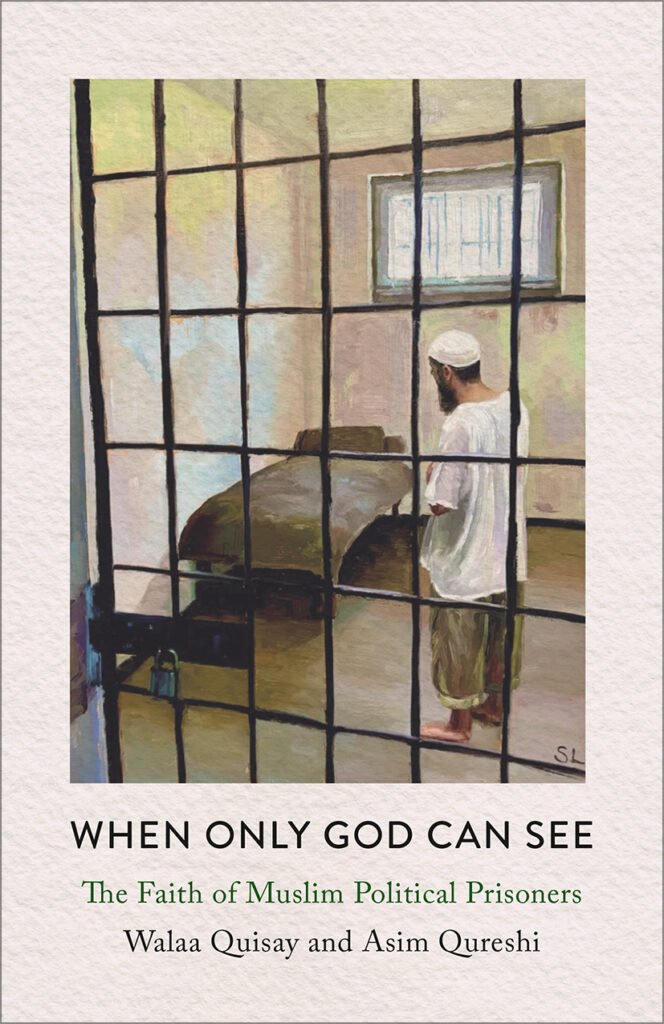
When Only God Can See
Our decline its causes and remedies
Bad Diaspora Poems Momtaza Mehri
Forthcoming Review

A forthcoming review of Justice and Islamic Law: Mazalim by Jonathan A. C. Brown.
This work examines the concept of mazālim courts and the broader framework of justice within Islamic legal tradition, with attention to how authority, governance, and accountability were historically balanced.
Read More


In Focus
Featured Book Review:
Beyond Timbuktu: An Intellectual History of Muslim West Africa.
“Islamic West Africa has enjoyed a rich tradition of learning since its earliest encounters with Islam. Kane (2016, p. 18) “traces the development of Islamic education” in the chapter titled The Growth and Political Economy of Islamic Scholarship in Bilad al-Sudan. This section highlights how African scholars established educational institutions comparable to other universities in the Muslim world. Kane references numerous writers, historians, travelers, geographers, and poets, including Abd Allah Abd al-Aziz al-Bakri (d. 1094), author of Kitab al-Masalik wa’l-Mamalik (The Book of Routes and Realms). He also mentions the Muslim African poet Al-Kanami, who composed the following lines in praise of the Almohad ruler Ya’qub al-Mansur:
“He removed his veil but my eyes, out of awe, saw him through a veil; his favour drew me near but being near, out of awe, I found myself distant…”

In Review
Ahmed ibn Hanbal
Review by Abdul Hai Writing a historical biography of any significant figure is always challenging, particularly when it concerns a figure like Imam Ahmed ibn Hanbal. Several challenges arise when…Podcast: Chat With Matthew Carr. Blood and Faith: The Purging of Muslim Spain, 1492-1614
Blood and Faith: The Purging of Muslim Spain, 1492-1614 Join me, your host Abdul Hai, as we dive into the gripping story of the Muslims of Spain and their fate…


Other Word: An International Journal of Creative Writing
Volume 3 | Issue 2
OUT NOW!!
Geopolitical conflicts and conspiracies ravage the world we inhabit, and those who pay the greatest price are often the ones whose hands are least stained by sin. The Islamic Literary Society presents this issue in loving memory of all innocent lives unjustly cut short by wars they never asked for. Literature may not single-handedly bring an end to war, but it can always make room for the voices of those who advocate for peace and justice.


ILS Digest.
Discover Issue 2, Volume 2 of the ILS Digest. Journey through the forgotten university of medieval Sonargaon, reflect on the enduring legacy of Istanbul’s sacred landmarks, and explore thoughtful essays on history, civilisation, and the intellectual traditions of the Muslim world. This issue invites readers to rediscover the past with fresh insight and renewed purpose.

ILS Digest.
Discover Issue 1, Volume 2 of the ILS Digest, where history, culture, and heroism come alive. Journey through the global struggles faced by Muslims, experience the elegance of archery of Islamic traditions, and uncover the inspiring story of a legendary Bangladeshi hero who became a symbol of courage. This volume weaves the past and present into a compelling story you won’t forget.
Articles
“The Road to Mecca by Muhammad Asad (1900–1992) and Desert Encounter by Knud Valdemar Gylding Holmboe (1902–1931) are the works of two such passionate and ambitious young Europeans who traveled across the Muslim world. Both men, converts to Islam as well as established authors, documented their journeys in detail, describing the people, landscapes, and political atmospheres they encountered”
Essay
Share your ideas and insights with a wider audience. The Islamic Literary Society is thrilled to offer an upcoming platform for scholars and thinkers to publish their work. This is your opportunity to contribute to a vibrant intellectual community, exchange ideas, and showcase your research. Stay tuned for more details—your work deserves to be seen!


Help us to reawaken our literary heritage
Support us by becoming a Patron

The Islamic Literary Society app is here!!
Exciting news! The Islamic Literary Society app is here and ready to be downloaded! No need to search—just tap and dive into the rich heritage of Islamic literature!