When Only God Can See
Reviewed by Muminah Khan
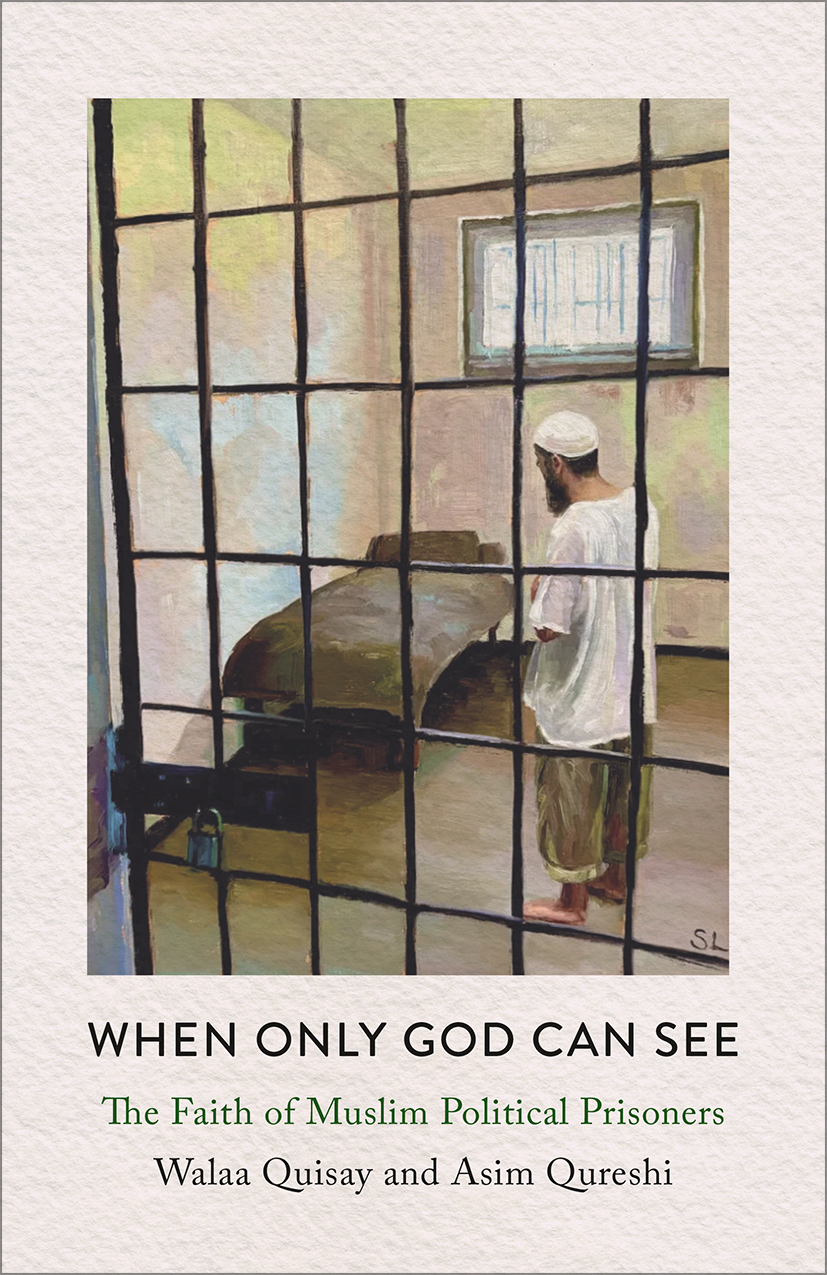
I read this book two months ago, and it has lingered hauntingly in my mind ever since. Few books I have read have stayed with me in such a profound manner. When Only God Can See, written by Walaa Quisay and Asim Qureshi, is a deeply moving exploration of what faith means under extreme conditions of suffering and how Muslim prisoners, who were arbitrarily captured, practised their faith whilst being subjected to horrific conditions in Guantánamo Bay, Egypt and Afghanistan.
The book explores several interconnected themes, including the meaning of faith and resistance for prisoners, the violence of capture, the prayers of the prisoners, and the ways in which Muslim prisoners come together as one ummah, amongst others. The reason this book has remained so firmly in my mind is the strength demonstrated by the prisoners within a system specifically designed to break them. These detention centres were places of dehumanisation. They were spaces where men were cut off from the world, stripped of their autonomy, tortured and treated as though they no longer belonged to humanity. Yet, even under such conditions, many prisoners remained steadfast in their beliefs. In circumstances where despair might seem inevitable, they continued to remember God, pray and read the Qur’an. They remained steadfast in their religion in times and places where faith might have been the last thing on many people’s minds.
One of the most powerful aspects of the book is the way it portrays faith not simply as private worship, but as a form of resistance. Prayer became an act of defiance against a system that sought to erase identity and hope. The prisoners’ commitment to Islam enabled them to preserve a sense of self when everything else was being taken from them. The title itself, When Only God Can See, captures this idea perfectly. When the world abandons you, when injustice remains hidden behind prison walls, faith becomes the final witness to suffering. Despite the harrowing accounts of torture and abuse, there is also an unexpected beauty woven throughout the book. Some of the most memorable moments are those that illustrate the solidarity between prisoners. The image of Muslim prisoners performing Jumu’ah prayers individually in their isolated cells, each man standing in the corner of his tiny space to imitate the rows of congregational prayer, is profoundly moving. It reflects not only devotion, but also the human need for connection and community, even under conditions of forced isolation. There was another moment in the book that struck me deeply: the account of a prisoner who would recite the Qur’an aloud through the walls of his cell, with others correcting his mistakes or continuing the verses from afar. These scenes reveal how faith created an invisible community between men who were physically separated but spiritually united.
Not only does this book skilfully expose the concealed realities of what happens to Muslims in detention centres, but it also refuses to reduce prisoners to statistics or political symbols. Instead, it restores their individuality and humanity. Whereas Western media often depicts these individuals as having committed the most serious of crimes, the book presents the true stories of those who were arbitrarily detained. It demonstrates their compassion, spirituality and perseverance. In doing so, the book challenges readers to confront the moral consequences of systems built on fear and dehumanisation.
Reading this book was emotionally difficult at times, but also deeply illuminating. It forced me to reflect on the strength of faith, the meaning of endurance and the ways in which human beings seek dignity even under the darkest conditions. More than anything, When Only God Can See is a testament to spiritual resilience. It is a book that leaves the reader disturbed by the cruelty it exposes, yet equally inspired by the unwavering humanity and faith of those who endured it.